
What Are the Traditional Telugu Wedding Rituals?
A Telugu wedding is one of the few Indian weddings where the bride and groom are symbolically treated as Lakshmi and Vishnu during the ceremony. From the start, they are seen not just as a couple, but as divine energies coming together, which is why every ritual is performed with such care and sacred chants. One beautiful tradition many people don’t know about is that the bride and groom are not allowed to see each other at the most important moment. A curtain called tera is held between them, representing their separate lives, and it is only removed at the exact auspicious second, marking the beginning of their journey together.
Telugu weddings are deeply rooted in meaning, timing, and family blessings. While they share the spiritual foundation found across South Indian wedding rituals, customs such as Jeelakarra Bellam give the ceremony its distinct identity. The cumin and jaggery paste placed on each other’s heads represents life’s bitter and sweet moments and the couple’s promise to face both together. Every ceremony takes place at a specific muhurtham and is believed to remove obstacles, bring prosperity, and prepare the couple emotionally and spiritually for marriage.
Telugu Wedding Rituals Before the Wedding Day
Matching / Fixing the Alliance (Pelli Choopulu)
Pelli Choopulu is the first official traditional meeting of the bride and groom along with their families. The groom’s family usually visits the bride’s house with sweets and gifts, and the couple gets a chance to meet and speak. Even though it may look like a simple introduction, this ritual is important because it sets the tone of acceptance and respect between both families. It is also when elders emotionally begin seeing the couple as future family. This is where the wedding journey truly begins in a traditional way.
Engagement Ceremony (Nischitartham / Nischayathartham)
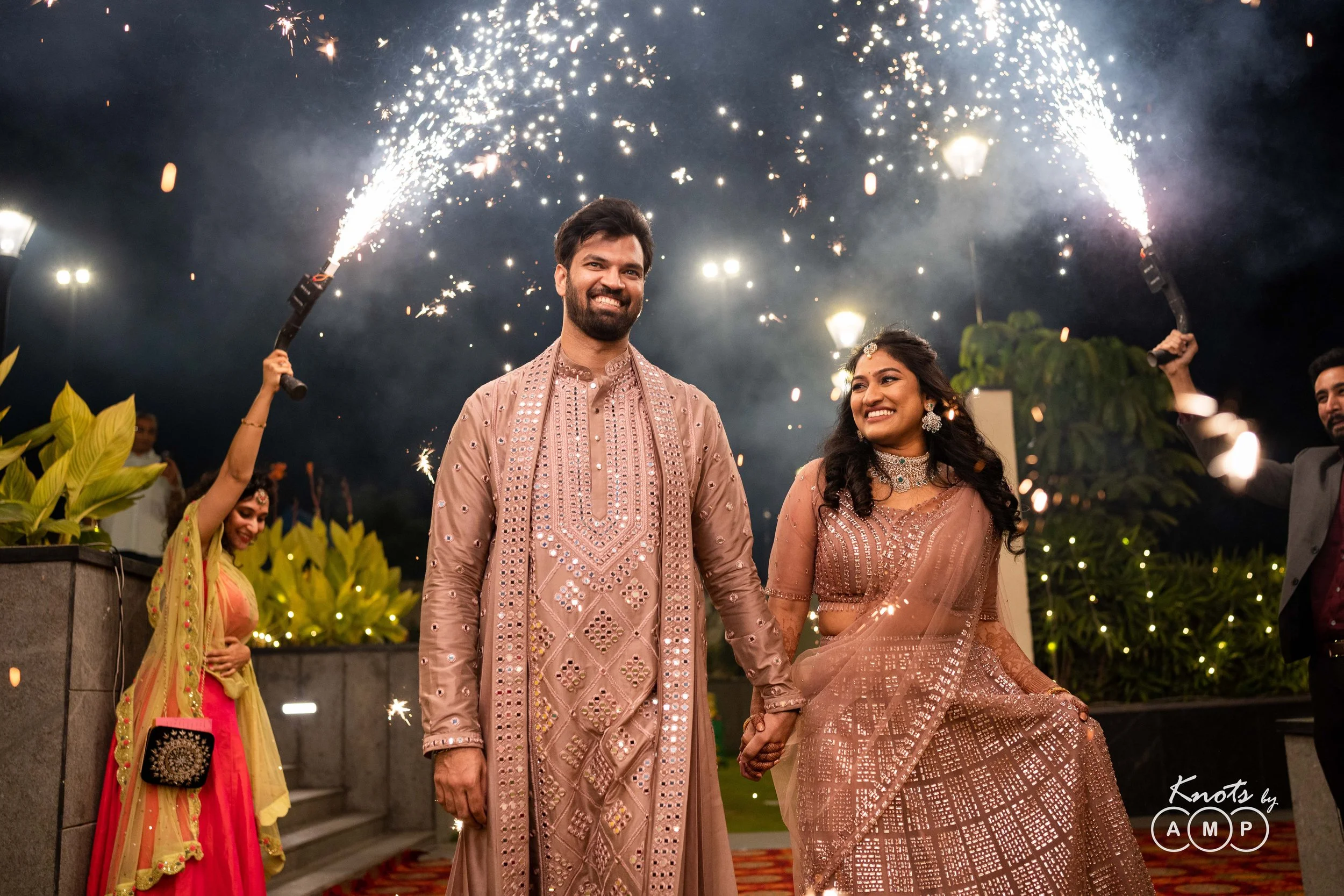
Nischitartham is the formal engagement ceremony where the wedding is officially confirmed. A puja is performed, blessings are given, and both families exchange gifts, sweets, and clothes as a sign of commitment. Rings may also be exchanged depending on the family’s preferences. For couples celebrating in the city, this is often when they begin shortlisting pre wedding shoot locations in Hyderabad for their engagement or save-the-date photographs. The ritual turns the marriage discussion into a confirmed relationship, with both families publicly accepting the union.
Bride and Groom Pre-Wedding Rituals
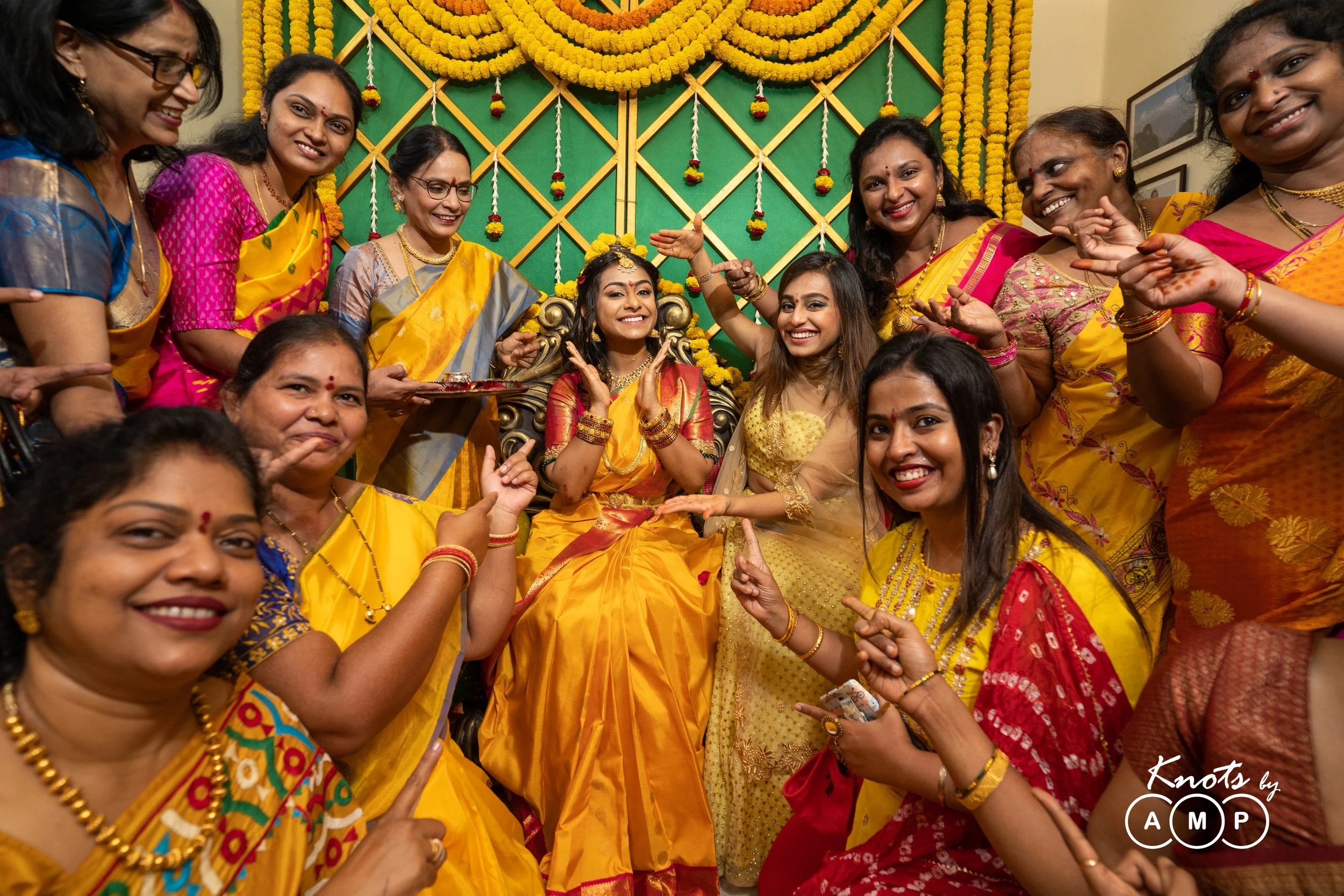
Before the wedding day, the bride and groom perform several traditional rituals at their respective homes. These include family prayers, pujas for peace and blessings, and sometimes fasting, depending on the family’s customs. For larger celebrations taking place across separate homes, wedding planners in Hyderabad can help coordinate the timings, décor and family movements without disturbing the traditional flow.
These rituals spiritually prepare the couple and invite positivity into the wedding process. They also bring families together, allow elders to guide the couple and help the bride and groom understand the significance of the journey ahead.
Main Telugu Wedding Day Rituals (In Exact Order)
Ganesh Puja
Ganesh Puja is the first main ritual performed on the wedding day, where Lord Ganesha is worshipped. A priest conducts the puja using sacred offerings like flowers, coconut, turmeric, and mantras. The ritual is significant because Telugu weddings strongly believe that no major auspicious work should begin without taking Ganesha’s blessings. This step is performed to remove obstacles, protect the couple from negativity, and make sure the wedding ceremonies move smoothly without interruptions.
Kashi Yatra
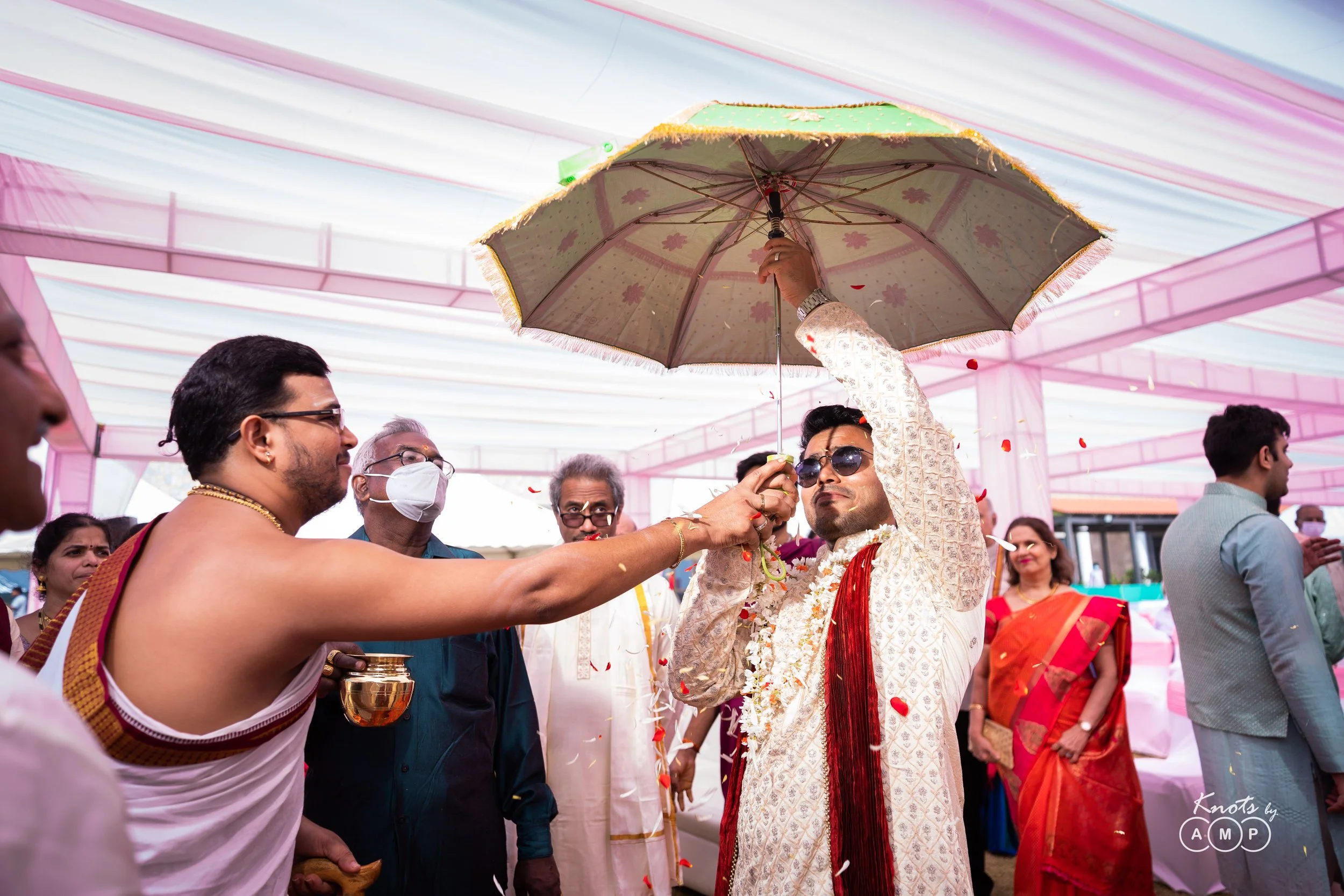
Kashi Yatra is a symbolic and memorable ritual where the groom pretends he is leaving worldly life to go to Kashi for spiritual enlightenment. He carries a small bag and starts walking away, and the bride’s father stops him and convinces him to accept marriage and family life. This ritual is significant because it represents that marriage is a sacred responsibility, not a forced obligation. It also adds warmth and humour to the wedding, while reminding everyone that family life is also a spiritual path.
Jeelakarra Bellam (Most Iconic Telugu Ritual)
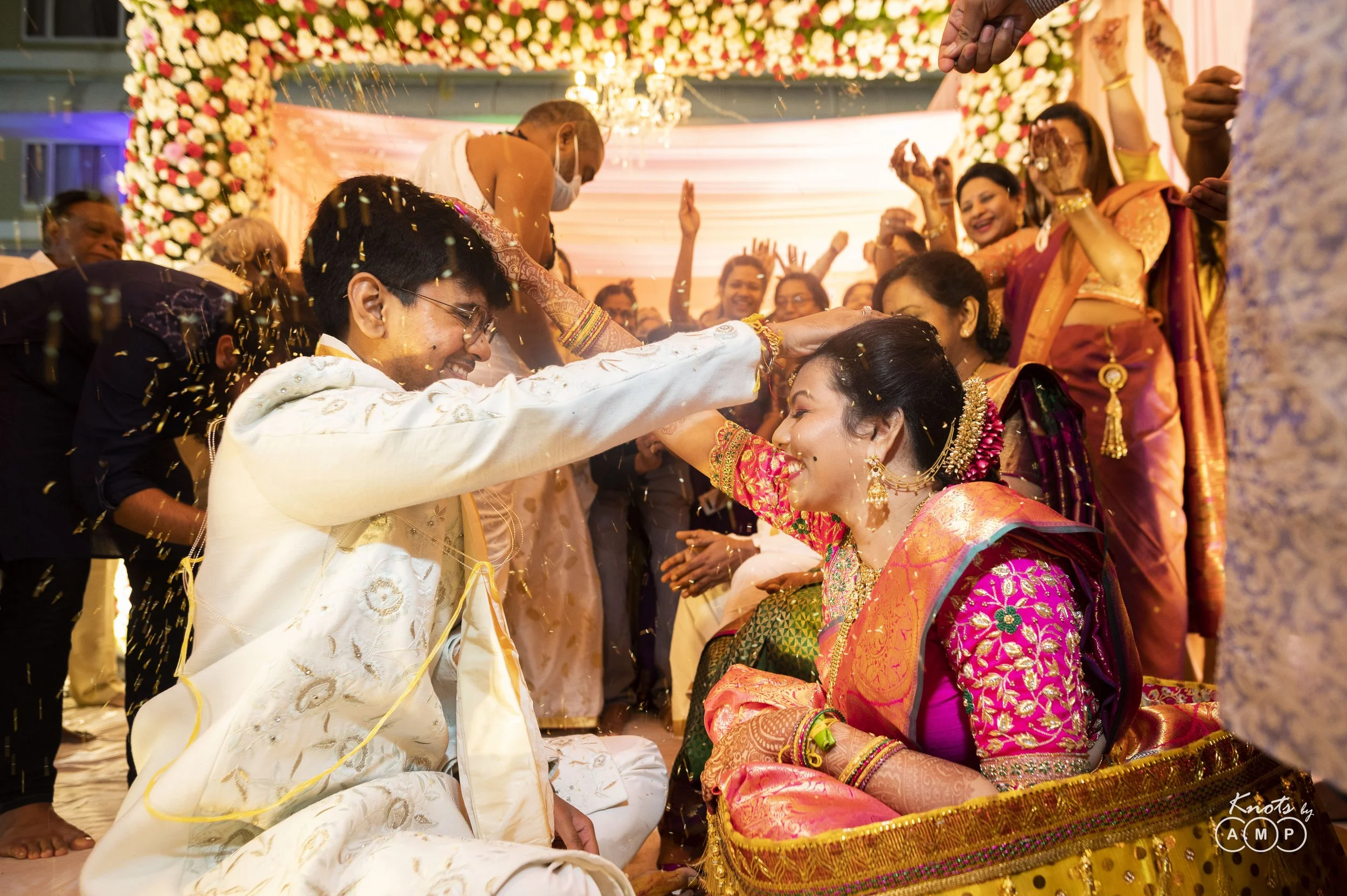
Jeelakarra Bellam is the most iconic ritual of any Telugu wedding and is performed exactly at the muhurtham time. Jeelakarra (cumin) and Bellam (jaggery) are made into a paste, and the bride and groom place it on each other’s head at the same moment. This ritual symbolises the sweetness and strength needed for a successful marriage, cumin representing strength and jaggery representing sweetness. The importance of this ritual is so high that many Telugu families consider this as the core moment of the wedding bond. It is also one of the most emotional and significant highlights in telugu wedding photography.
Kanyadaanam
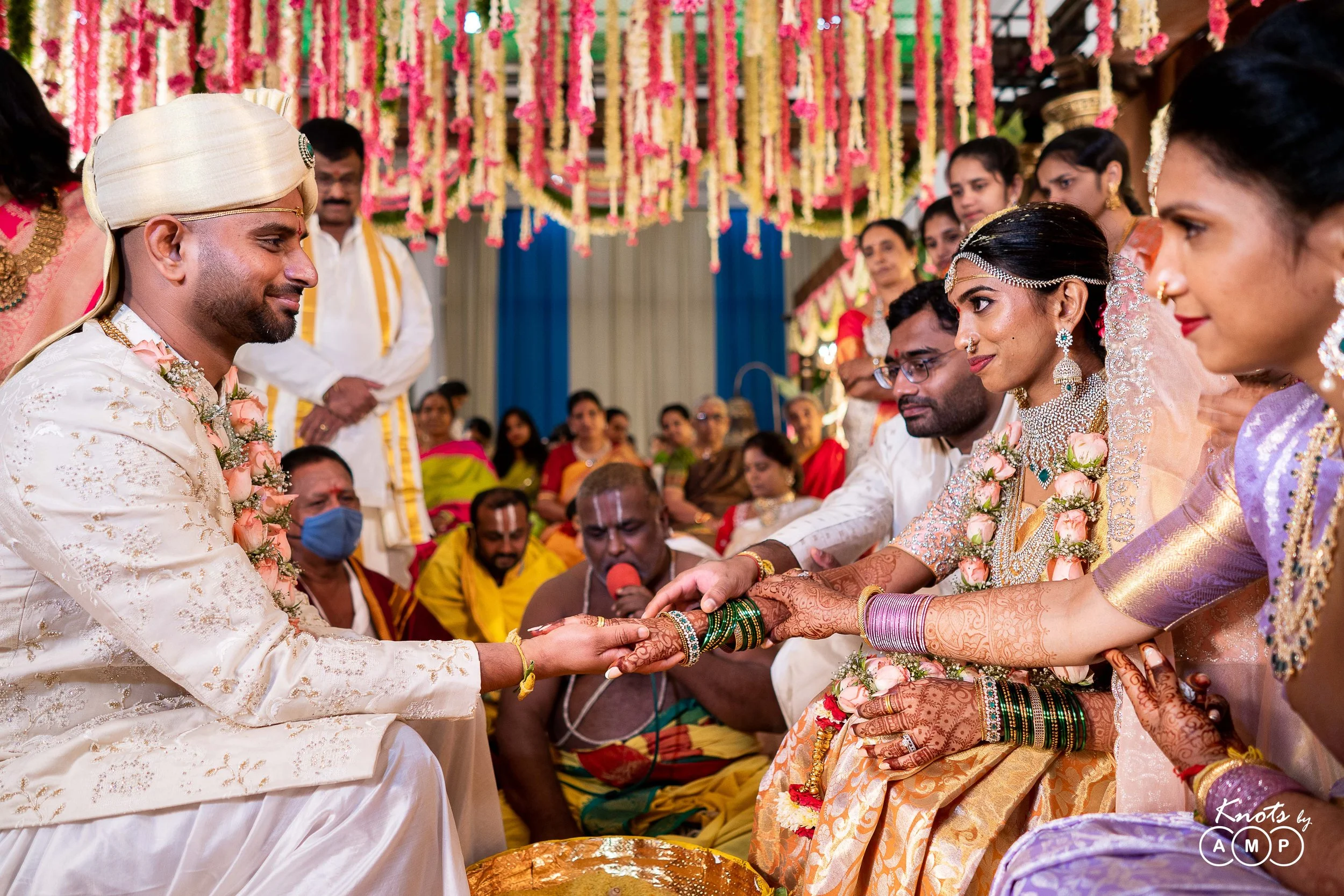
Kanyadaanam is one of the most emotional moments in Telugu weddings, where the bride’s father places her hand into the groom’s hand. This is done while the priest chants sacred mantras and elders bless the couple. The ritual represents the parents’ trust in the groom and their blessings for their daughter’s new journey. It holds deep emotional meaning because it is not just a ritual, it is a parent’s moment of letting their daughter start a new life. This is often a tearful yet beautiful moment for the entire family.
Mangalsutra Dharana (Tying the Mangalasutram)
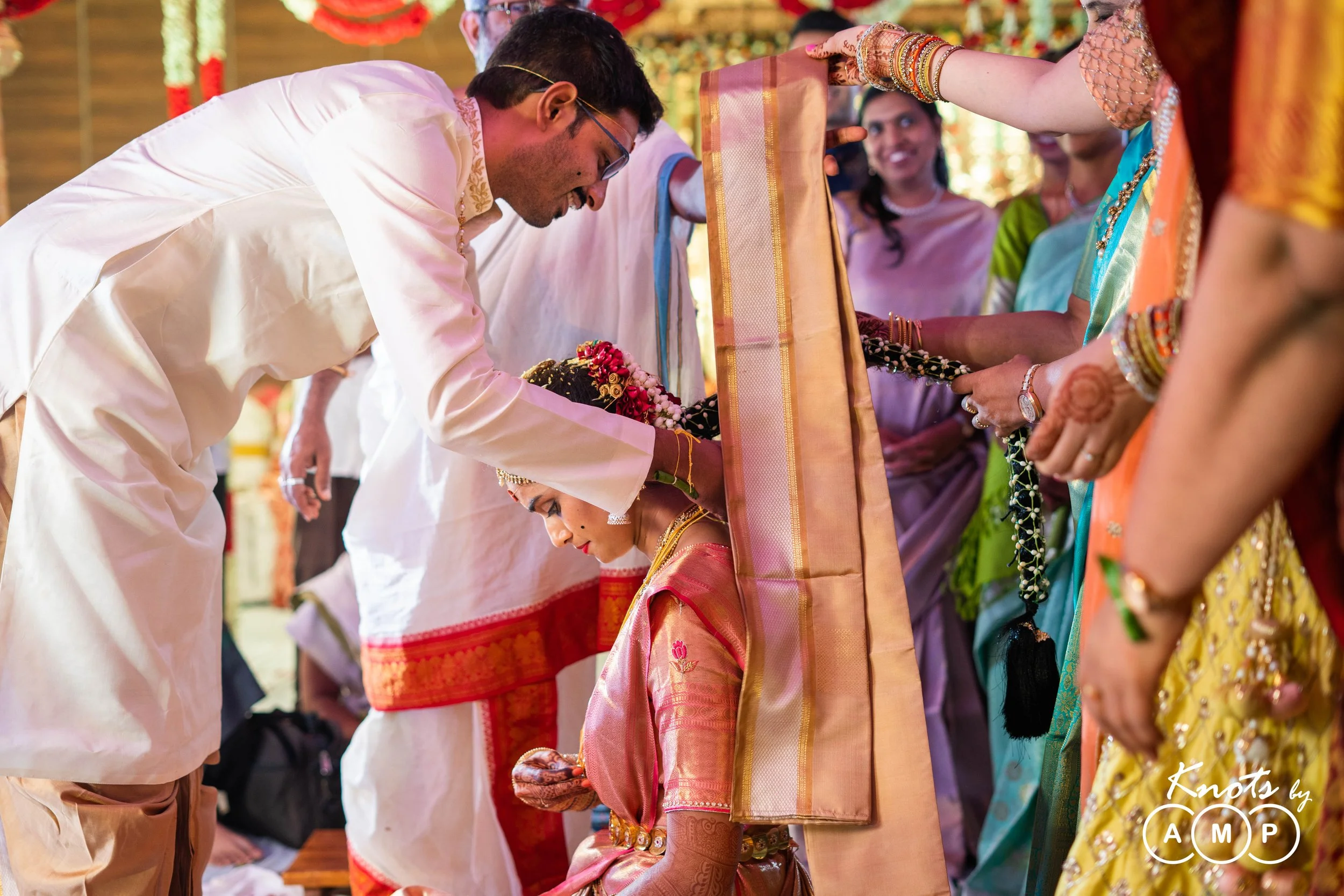
Mangalsutra Dharana is the ritual where the groom ties the mangalasutram around the bride’s neck. This happens at a sacred moment with mantras and blessings, often with loud celebratory sounds, music, and family cheering. The ritual signifies lifelong commitment and protection, as the mangalsutra becomes a powerful symbol of the bride’s married status. In Telugu tradition, this moment is considered extremely sacred and central to marriage. This also becomes one of the most iconic images in every telugu wedding album.
Madhuparkam
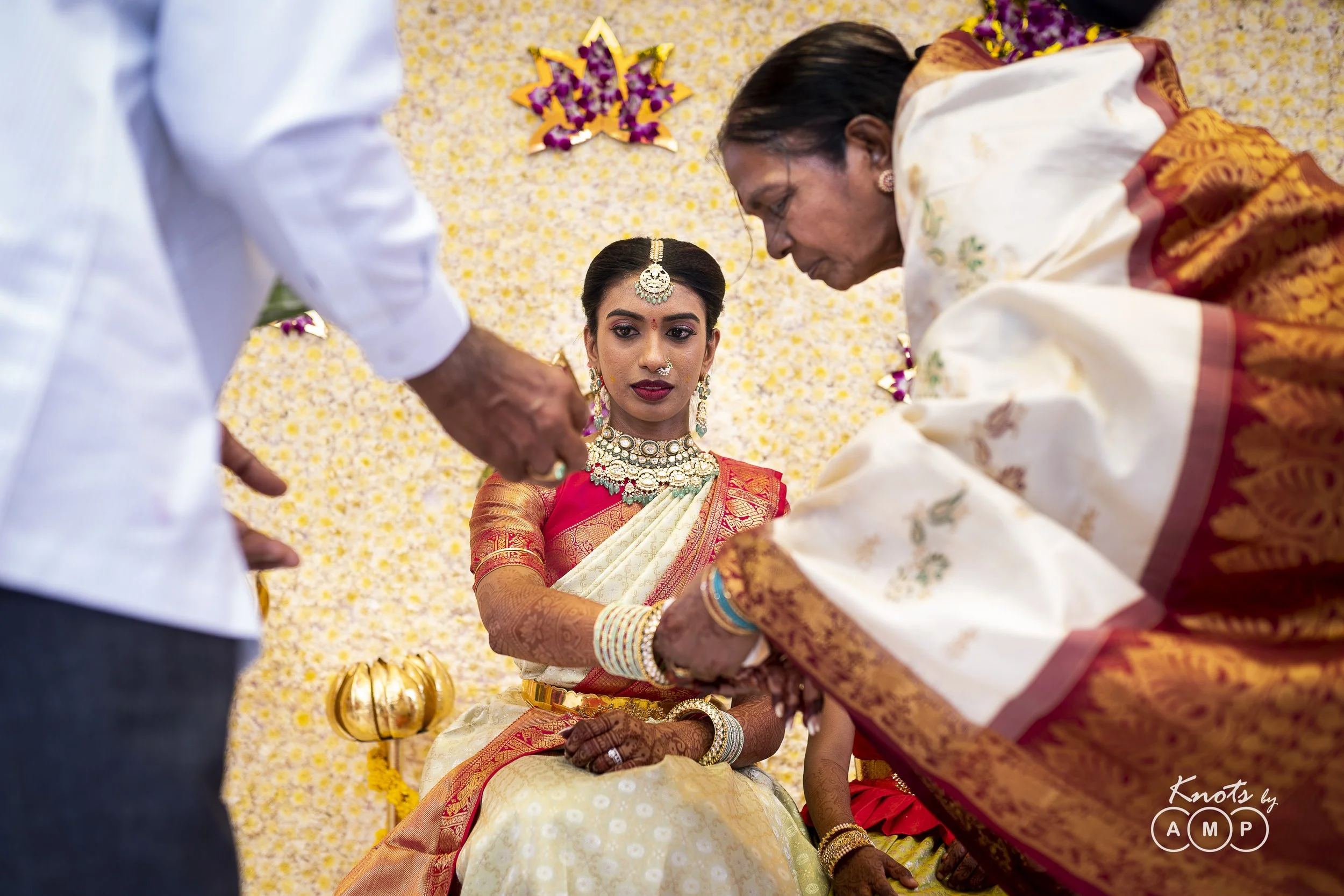
Madhuparkam is associated with the bride’s sacred wedding attire, usually a traditional white saree with a red border. The bride wears this saree during important parts of the wedding ceremony, and it has a spiritual meaning of purity and tradition. The significance of this ritual is that it shows respect for the sanctity of marriage and the cultural roots of Telugu families. Even in modern weddings where outfits are grand and stylish, Madhuparkam remains a respected tradition because it reflects the sacred nature of the ceremony.
Talambralu
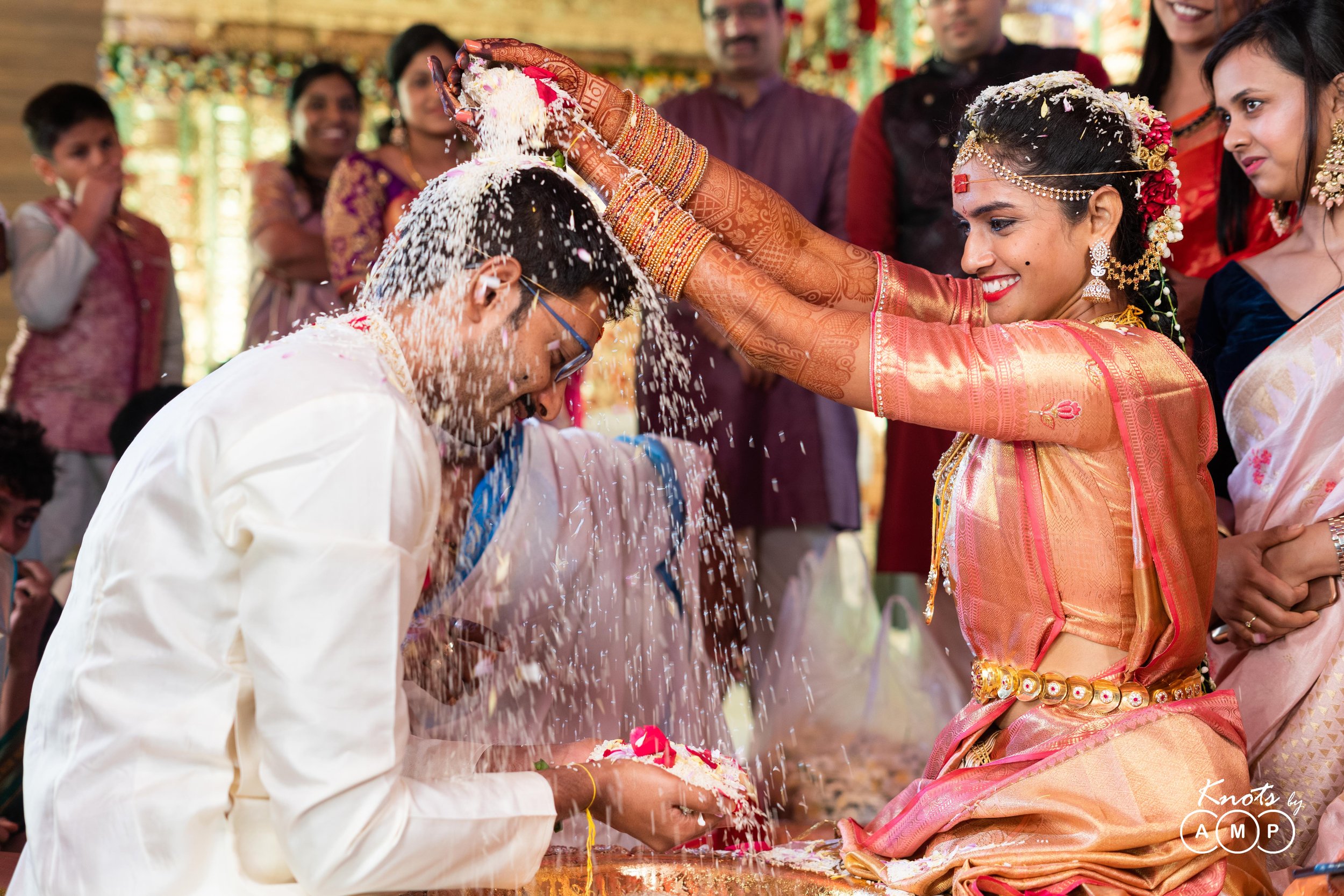
Talambralu is a joyful ritual where the bride and groom shower each other with rice mixed with turmeric pearls. This is usually done multiple times and creates a cheerful mood because the couple smiles freely and the families enjoy the moment. The ritual represents prosperity, happiness, and blessings for the couple’s future. It is also seen as a symbolic gesture of abundance, wishing that the couple’s life is always filled with joy and wealth. This becomes one of the most fun-filled highlights of Telugu wedding rituals.
Saptapadi / Seven Steps
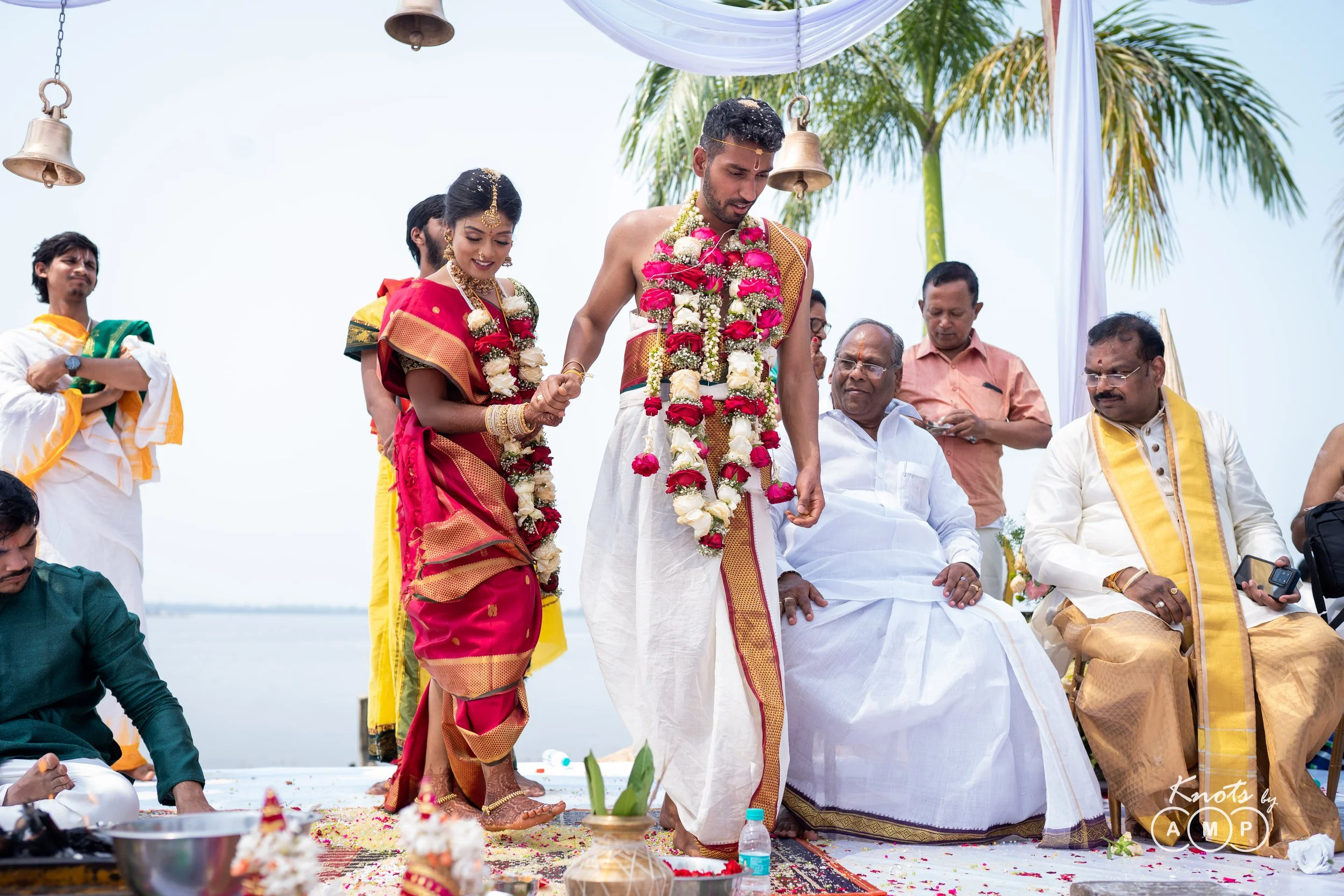
Saptapadi is the ritual where the couple takes seven sacred steps together, representing the promises they make for married life. The priest chants mantras as they walk, and each step symbolises a vow such as love, friendship, support, responsibility, and togetherness. The significance of Saptapadi is that it reminds the couple that marriage is not just about rituals, it is about partnership. In many families, this is seen as a key moment because it marks the beginning of the couple’s shared journey as equals.
Arundhati Nakshatram Darshanam
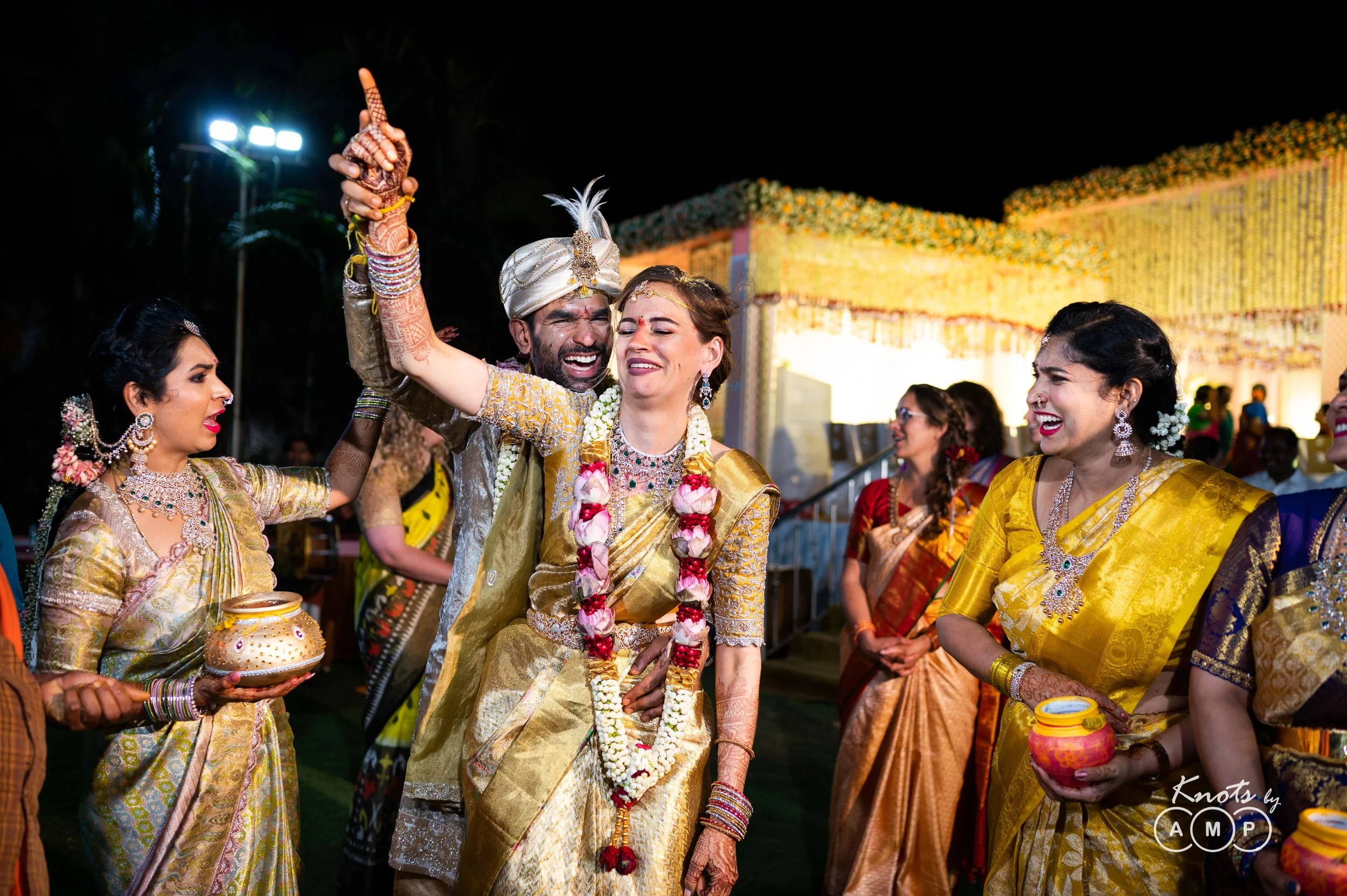
Arundhati Nakshatram Darshanam is a unique ritual where elders show the couple the Arundhati star. The elders explain that Arundhati symbolises stability, loyalty, and an ideal married life. The ritual may look simple, but it holds deep meaning, it teaches the couple that marriage should remain steady and strong even during hard times. This ritual is significant because it brings a calm, spiritual closure to the wedding ceremonies, reminding the couple of long term values and commitment.
Telugu Wedding Rituals After the Wedding
Aashirvaadam (Blessings from Elders)
Aashirvaadam is the ritual where the couple takes blessings from elders by touching their feet. Elders bless them with long life, happiness, and prosperity, often giving gifts or sacred items. This ritual is significant because it represents acceptance, love, and family support. In Telugu tradition, blessings from elders are considered extremely powerful and essential for a successful marriage. It also creates a warm moment where the couple feels emotionally protected and surrounded by love.
Appagintalu (Bride’s Send-Off)
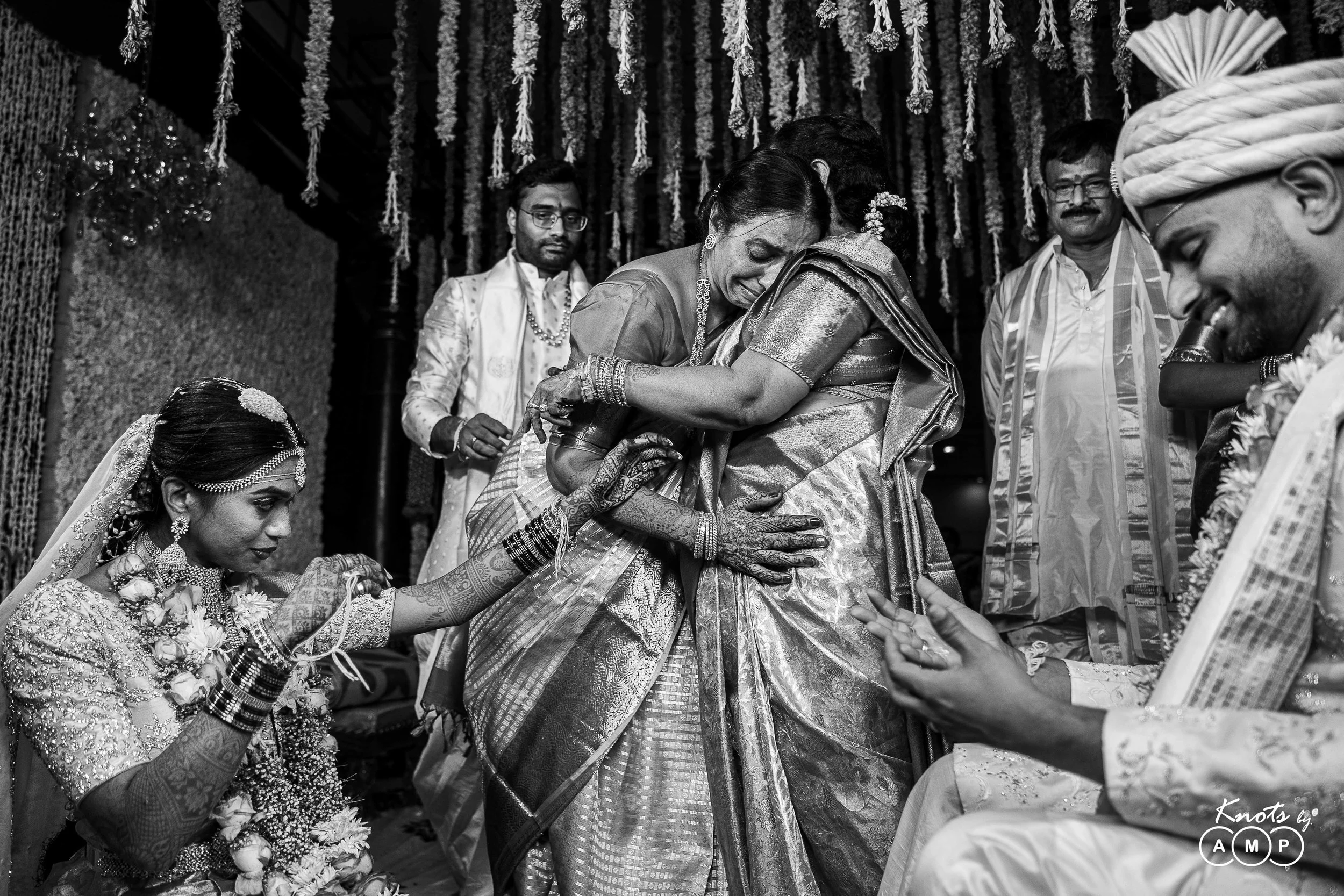
Appagintalu is the bride’s formal send off ritual, marking her emotional transition from her parental home to her new life. The bride’s family blesses her, relatives say goodbye, and there are often tears and emotional hugs. This ritual symbolises the deep bond between the bride and her parents and shows the emotional weight of marriage in Indian culture. It is significant because it is the moment the bride truly feels the change in her life, and the family experiences both pride and emotional pain of separation together.
Grihapravesam
Grihapravesam is the bride’s first entry into the groom’s home after marriage. She is welcomed with aarti, blessings, and small rituals that symbolise prosperity and good fortune entering the home. The bride steps in with her right foot, and family members treat her like Lakshmi entering the house. The significance of this ritual is that it represents new beginnings and acceptance, making the bride feel welcomed and respected. It also brings a sense of completeness to the wedding journey.
How KnotsbyAMP Captures Every Telugu Wedding Moment Beautifully
Some moments last only a few seconds but remain in the heart forever. The Jeelakarra Bellam paste touching the couple’s heads, the tears during Kanyadaanam, the laughter of Talambralu and the sacred calm of the mangalsutra ceremony all carry emotions that cannot be recreated.
Capturing these moments is not only about using a camera. It requires an understanding of the ritual sequence and the ability to anticipate what will happen next, which is an essential quality when selecting wedding photographers in Hyderabad.
At KnotsbyAMP Photography, our understanding of Telugu wedding rituals helps us recognise important moments before they unfold. Our photography and wedding films follow a natural, story-driven approach centred on emotions and family bonds. Couples can also explore our wedding photography portfolio to see how these brief moments come together to tell the complete story of a wedding.
Conclusion
Traditional Telugu weddings are deeply spiritual and beautifully structured. Each ritual has a meaning, and each step adds blessings to the couple’s new life. Once you understand telugu marriage rituals, the wedding feels even more magical because you know why every ritual is performed.
A Telugu wedding is not just a marriage ceremony, it is a sacred promise wrapped in tradition, family love, and unforgettable memories.
Looking for a Wedding Photographer?
Fill in this form & team will connect back with you!
FAQs
What is Jeelakarra Bellam and why is it important?
Jeelakarra Bellam is a paste made of cumin and jaggery applied by the bride and groom on each other’s heads during the muhurtham. It symbolises unity, as the two ingredients cannot be separated once mixed. The ritual represents a promise to stay together through both sweetness and challenges in married life.
What is the difference between Nischitartham and engagement?
Nischitartham is the traditional Telugu ceremony where families officially confirm the marriage alliance through rituals and priest-led puja. The wedding date and muhurtham are usually fixed during this ceremony. A modern engagement may be more social, but Nischitartham holds religious and cultural significance.
How long does a traditional Telugu wedding ceremony take?
A traditional Telugu wedding ceremony usually lasts between 2 to 4 hours. The duration depends on the muhurtham timing and the number of Vedic rituals followed. Families who strictly follow customs may have slightly longer ceremonies.
Why do Telugu weddings happen early morning?
Telugu weddings often take place early in the morning because that time is considered astrologically auspicious. The muhurtham is selected based on planetary positions and priest guidance. It is believed that starting the marriage at a sacred hour brings long term prosperity and harmony.
What happens in Kashi Yatra ritual?
In the Kashi Yatra ritual, the groom symbolically decides to renounce worldly life and leave for Kashi. The bride’s father stops him and requests him to accept marriage and family responsibilities. The ritual highlights the importance of entering grihastha life with commitment.
Is Saptapadi done in Telugu weddings?
Yes, Saptapadi is performed in most Telugu weddings as an important Vedic ritual. The couple takes seven steps together around the sacred fire, each step representing a vow. These vows signify commitment, trust, and shared responsibilities in marriage.
What is the meaning of Talambralu?
Talambralu is the ritual where the bride and groom shower each other with sacred rice mixed with turmeric. It symbolises prosperity, abundance, and happiness in their married life. The ritual also adds a joyful and emotional moment to the ceremony.
What are the after marriage rituals in Telugu weddings?
Common post wedding rituals include Aashirvaadam, where elders bless the couple for a happy life. Appagintalu marks the formal farewell of the bride to her new family. Grihapravesam welcomes the bride into her husband’s home with traditional customs.
